Gochujang usually arrives halfway through the story. A spoonful beside your bibimbap. A red coating on pork. The reason you reach for another glass of water, then immediately another rice cake. In Sunchang, I would give it the afternoon instead: meet the place that makes it, find a meal that puts it to work and stay long enough to do something besides shop for a jar.
This is a food-led overnight in an inland county, not a second Jeonju with a different sauce. Start around the traditional gochujang village and fermentation attractions, sleep in Sunchang-eup, then trade the tasting spoon for a walk at Gangcheonsan the next morning. One night gives both halves a little room.
01
Give Sunchang a night if food is part of the journey
You can buy Sunchang-branded gochujang without visiting Sunchang. The reason to come is the extra context: the producers, the jars, the choices between pastes and pickles, and a lunch that makes those choices less abstract. If that sounds like your kind of afternoon, the town has something to offer beyond a label on a supermarket shelf.
An overnight works particularly well when you are already exploring Jeonbuk or moving through the southwest. From Seoul, I would want most of two days available, rather than two long journeys wrapped around a hurried lunch. If your Korea trip is only a week and the main cities are still new to you, this is an appealing return-trip idea rather than another compulsory stop.
The main food cluster, the town centre and Gangcheonsan are separate areas. The route below gives each a job: the village for browsing, town for dinner and a bed, the park for tomorrow’s change of scene. It does not try to add every bridge, river bend and lookout in the county.
02
Start with the makers, not the souvenir bag
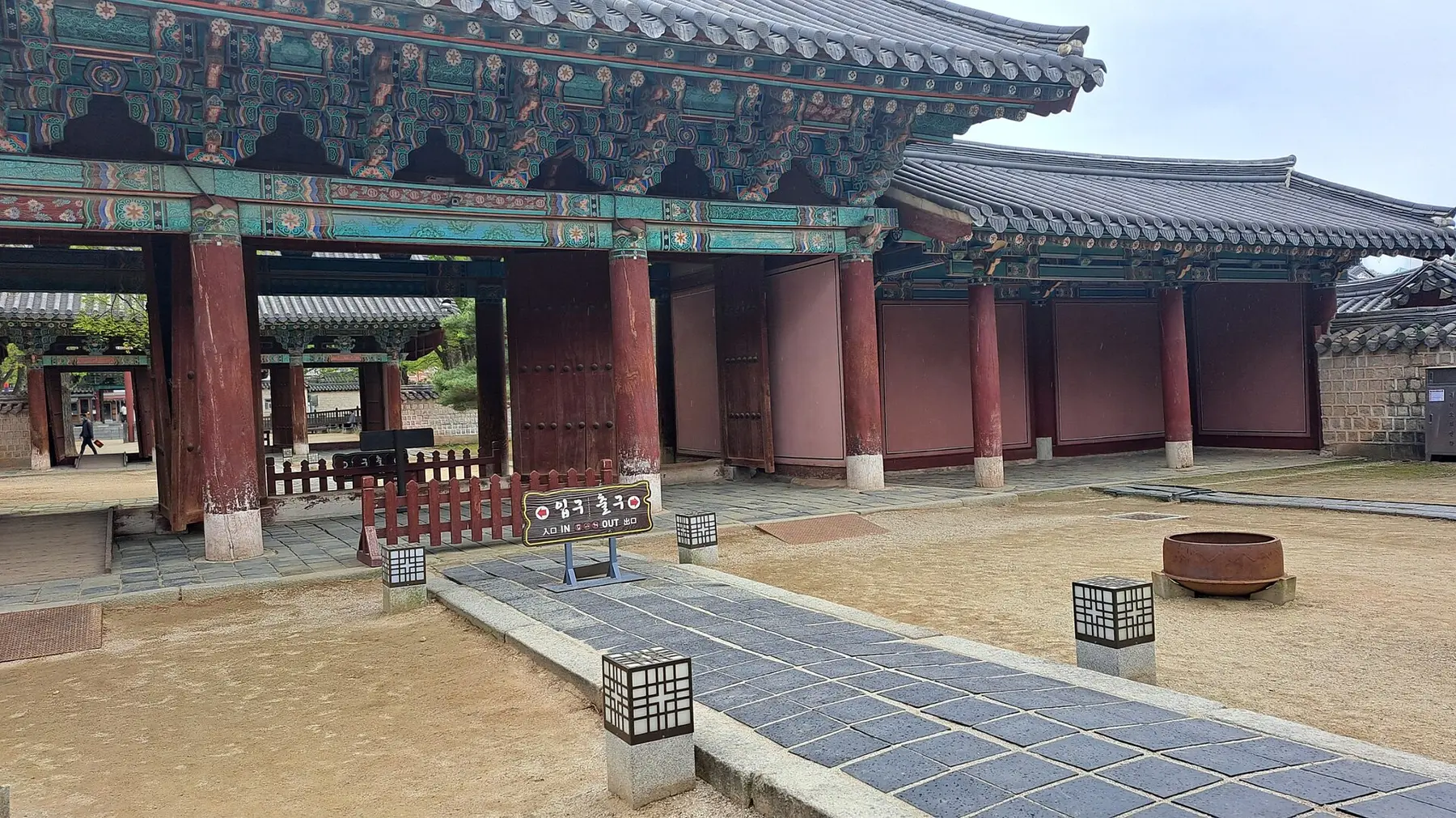
Save 순창전통고추장민속마을, the Traditional Gochujang Folk Village. The tiled roofs and rows of earthenware jars are attractive, but this is also a production and sales community. The county created it between 1994 and 1997, bringing producers together. Think of a working food village, not an untouched old settlement whose shops happen to sell sauce.
Give yourself 60–90 minutes to browse a few businesses rather than treating every doorway as the same shop. Ask what the maker recommends and, where tasting is offered, compare a small amount before buying. Look for differences in sweetness, saltiness and the grain underneath the chili, not simply the hottest option. Your mouth has more interesting work to do than proving a point.
There is more than red paste here. Producers also sell doenjang, ganjang, cheonggukjang and preserved vegetables. A small packet of jangajji, vegetables preserved in seasoning or sauce, may suit your everyday cooking better than the biggest jar of gochujang. Ask how it should be stored once opened.
Some makers and local facilities offer gochujang-making sessions. Arrange one with the actual provider before building your day around it, including the language, party size, duration and what you take home. A short visitor workshop is an introduction to the process, not months of fermentation completed before lunch. Stay in visitor areas and ask before photographing people or entering a production courtyard.
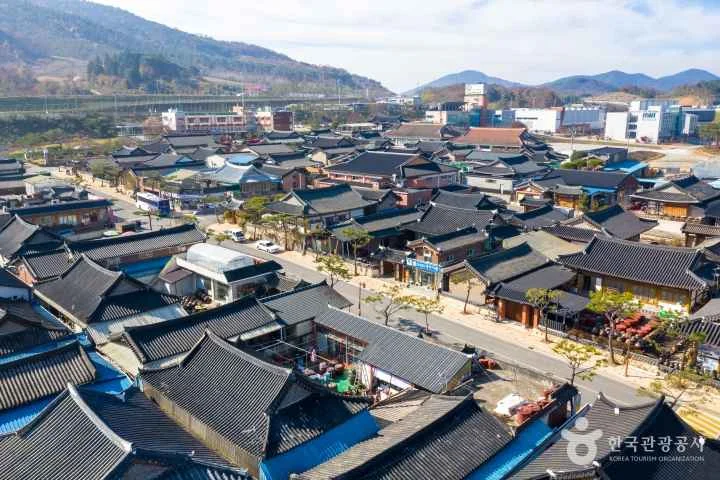
Sunchang’s sauce-making village, November 2018.
03
A little jang knowledge makes lunch more interesting
Jang is the wider family. Gochujang is the red chili paste; doenjang is the savory soybean paste; ganjang is soy sauce. They share space in the Korean kitchen without doing identical jobs. Sweetness, salt, fermentation and texture matter as much as the red colour that tends to get all the attention.
Korea’s knowledge and practices around jang making were inscribed on UNESCO’s Intangible Cultural Heritage list in 2024. The recognition covers making, keeping and using jang, including the way families pass the knowledge on. It is not a UNESCO award for every jar with a Sunchang address. The human practice is the point.
For shopping, I would begin with one question: what will I cook with this at home? A paste you will stir into a weeknight sauce is a better souvenir than a handsome container you are afraid to open. Ask about ingredients and storage, then choose a manageable size. Soy is common in jang, and grains such as wheat or barley may be present; ask the maker about your exact dietary needs rather than treating a traditional label as an allergen guarantee.
| On the label | What it is | A useful question |
|---|---|---|
| 고추장 · gochujang | Fermented red chili paste | How sweet and how spicy is this one? |
| 된장 · doenjang | Fermented soybean paste | Would you use it for stew, dipping or both? |
| 간장 · ganjang | Soy sauce | Is this intended for seasoning soup or for other cooking? |
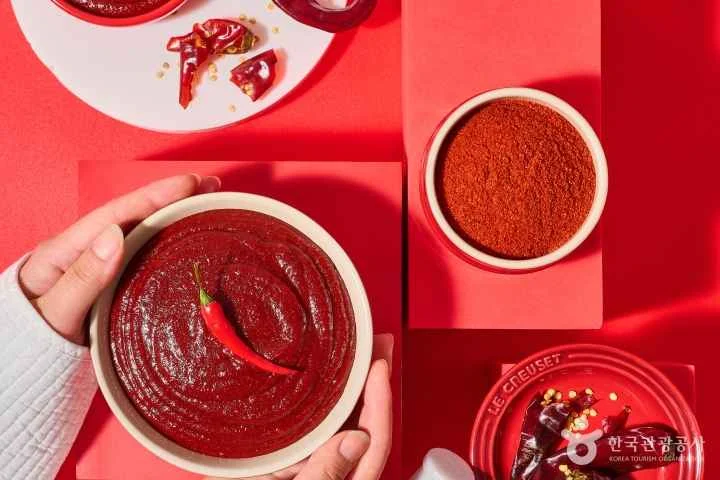
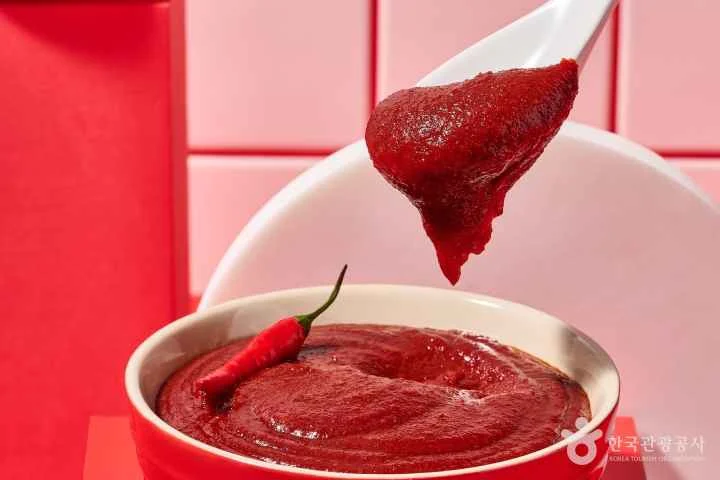
Paste and powder: two different forms of chili, December 2023.
04
Put the sauce to work over a proper meal
For a concrete lunch lead, look up 순창맛이레, Sunchang Matire, at 순창11길 31-16. KTO describes its gochujang bulgogi as pork marinated in Sunchang gochujang, topped with vegetables including minari and grilled. This is a useful way to move from admiring jars to understanding why you came. The county also lists the restaurant at the same address.
Treat that as a researched lead, not a reserved table or a current menu quote. Check the day’s opening and whether the dish requires two portions. With two people, a shared main makes the decision easy; alone, confirm a single-serving meal before sitting down. I would rather have one satisfying plate than order for an imaginary second diner.
There is no need to make every meal red. 순흥즉석순두부가든, listed by the county at 장류로 77, is another lead for a tofu-focused meal. KTO’s Sunchang route identifies it with sundubu baekban, a soft-tofu set meal. Ask about the broth and side dishes if you avoid meat or seafood. A tofu restaurant is not automatically a vegetarian restaurant.
Choose lunch and dinner as different meals. You might have pork at midday and a soup or set meal in town later, or reverse the order if opening hours work better. Leave room for a café stop. The aim is to enjoy the town’s food, not to spend the afternoon recovering from a competitive tasting schedule.
05
Choose one fermentation stop, and check its actual address
The Fermentation Theme Park, 순창발효테마파크, is at 장류로 55 beside the wider village area. It has several separately ticketed buildings, with exhibits and play spaces aimed at different ages. An adult interested mainly in sauce does not need to purchase every available activity.
My first choice for the food-culture angle would be 발효소스토굴, the Fermentation Sauce Cave. Its galleries place Korean jang beside sauces from other countries and include media displays and a storage section. Crucially, the operator lists it at 민속마을길 61-59, 1.2 km from the main Theme Park. Save both pins and decide how you will cover that extra leg; do not assume it is a room in the next building.
The published adult price is ₩3,000 for the Sauce Cave alone or ₩5,000 for the combined Cave and Hongmaegwan exhibition ticket. Hongmaegwan takes a broader food-science approach. Families may prefer it or one of the play-oriented buildings, but those facilities have their own prices and some use timed sessions.
In November–February, exhibitions run 10:00–17:00 with last entry at 16:30; March–October hours are 10:00–18:00 with last entry at 17:00. Monday is the regular closure, with additional holiday arrangements listed by the operator. Allow roughly an hour for your chosen exhibition and more for the transfer. These are planning allowances, not a measured visit or a promise of a workshop place.
06
Sleep in town, with dinner within reach
For this route, I would start the room search in 순창읍, Sunchang-eup, near the terminal and the restaurants you actually want to use. The useful luxury is being able to finish dinner and walk back. A rural room can be lovely, but if every meal needs another drive, it buys a different kind of evening.
일우당, Ilwudang, is one specific lead in the county’s guesthouse directory, at 순창7길 18-1, telephone 063-652-8051. The listing establishes a place to contact, not current availability or an inspected room. Ask about bed versus floor bedding, private bathroom, heating, check-in and luggage storage. Compare it with town hotels or motels using the full room total for your actual night.
If you have a car and want the park to shape the stay, search the Gangcheonsan side instead, then confirm dinner and breakfast before booking. Without a car, I would favor town and arrange the next morning’s return transport in advance. A scenic address and an easy breakfast are not the same thing.
After dinner, a short local walk is enough. Do not book this as a late-night entertainment district. In particular, the county has suspended Gyeongcheon’s music fountain and Dumulmeori’s ground fountain from November 1, 2026 to February 28, 2027. You can enjoy an ordinary evening without promising yourself a water show.
| Base | Why choose it | Before booking |
|---|---|---|
| Sunchang-eup / terminal area | Food-led stay and a simpler car-free arrival | Actual walk to dinner, room type and luggage storage |
| Gangcheonsan / Paldeok side | An early valley morning with your own vehicle | Evening food, breakfast, parking and distance to the park entrance |
| Rural pension elsewhere | The accommodation itself is part of the escape | Every local journey and your next-day departure |
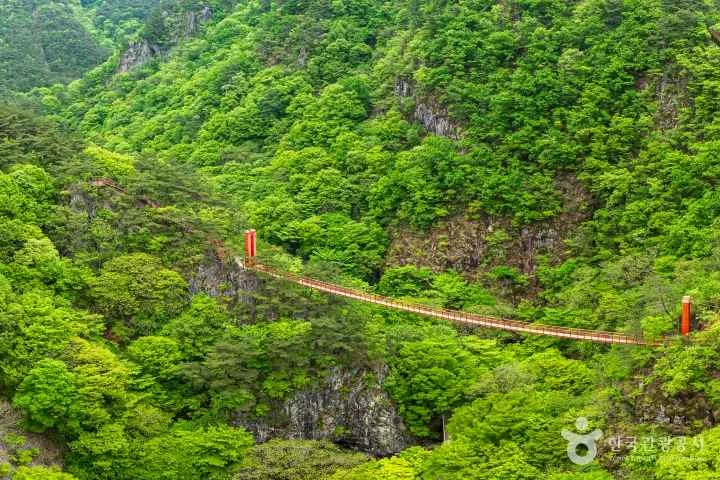
A bright red crossing above the valley, April 2024.
07
Tomorrow, swap the tasting spoon for a valley walk
Gangcheonsan, 강천산군립공원, is the change of scene that makes the second day feel like a second day. The park brings cliffs, waterfalls, forest paths and Gangcheonsa Temple into one valley. You do not need to turn it into a summit hike to enjoy it.
For a modest morning, start from the main entrance at 강천산길 97, see Byeongpung Falls and continue only as far along the valley as your time and group comfortably allow. Reserve about two hours for a shortened out-and-back, including pauses, rather than promising yourself the whole advertised course. The elevated red suspension bridge is an optional extension with a climb, not something every visitor has to cross.
The park’s current visitor page lists individual adult admission at ₩5,000 and student admission at ₩4,000. Its published winter entry hours, November–March, are 07:00–17:00. Check the latest dated notice before leaving town, since the park can adjust access and hours. Pets are not admitted. Wear shoes suited to wet leaves, uneven ground or winter conditions; this suggested route is not a step-free access assessment.
In autumn, enjoy whatever colour is there rather than booking a specific shade of red. The photographs here show spring greenery. If the weather makes a valley walk unappealing, use the morning for the fermentation attraction you skipped, provided it is open, then have an early lunch and head onward. There is no need to force a mountain into a food weekend.
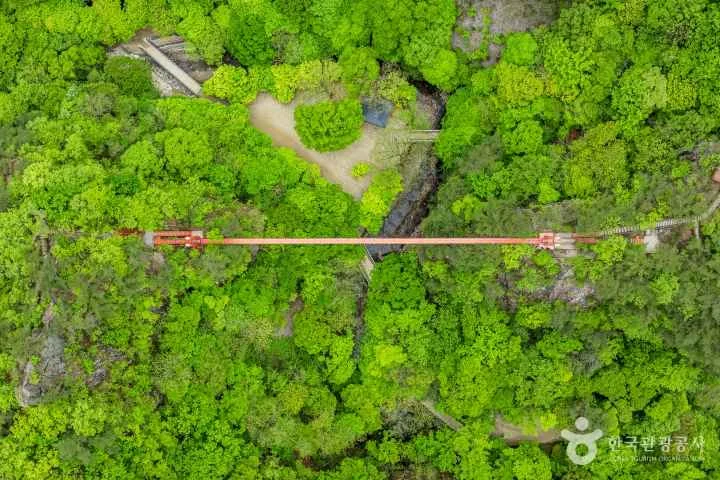
The bridge and valley paths from above, April 2024.
08
November 21–22: the tteokbokki extra
The 2026 Sunchang KOREA Tteokbokki Festa runs November 21–22, 10:00–17:00, around the Fermentation Theme Park and traditional gochujang village. General entry is free, with some paid programs. The organizer lists tteokbokki pop-ups, retro-themed goods, craft activities, a local flea market and a food court.
It is a cheerful reason to put this overnight on the calendar, but keep its stalls separate from your expectations of a normal village visit. Festival entry does not mean every Theme Park building, tasting or activity is included. Check the organizer’s daily program, then protect time for whichever permanent stop matters most to you. Outside those two dates, the guide’s village, meal and valley plan still stands.
09
Make the journeys small enough to enjoy the place
For a bus-led trip, use 순창공용버스터미널 as your arrival search, then compare your actual date in KOBUS or Bustago. Jeonju and Gwangju are useful gateways to investigate, but do not assume a railway ticket gets you directly to Sunchang town. Check both the intercity leg and the final local journey before buying a connection.
The Theme Park operator describes the main park as about five minutes by taxi from Sunchang Terminal and also lists a local bus to the village-front stop. That is an indication of scale, not a live fare or a timetable. Confirm the bus departure or arrange a taxi, particularly for the return from Gangcheonsan. Save addresses in Korean and leave room for waiting.
With your own car, group the village and chosen exhibition on day one, park it for the town evening, and give Gangcheonsan day two. Without one, agree the park’s outward and return journey first. If that becomes disproportionate to the walk, keep the trip food-led and drop the park rather than spending the morning solving transport.
Build the budget from your room and intercity ticket quotes, then add lunch, dinner, breakfast, coffee, local transport and the specific admissions you chose. The Sauce Cave and an adult park visit add ₩8,000 before any other activity; the room, meals and transfers are separate. No current hotel rate, restaurant price or taxi quote is assumed.
For the jar you take home, ask the producer how to store and seal it, then check your airline and destination’s food rules. Small is a perfectly respectable souvenir size. The best outcome is not a suitcase full of sauce. It is knowing what you would like to cook when you get back.
References
- Sunchang County: traditional gochujang village, its creation and producers
- UNESCO: Korea’s jang-making knowledge and practices, inscribed in 2024
- KTO: Sunchang’s jang culture and Sunchang Matire food lead
- Sunchang Fermentation Theme Park: seasonal hours and closing days
- Sunchang Fermentation Theme Park: admission by building
- Sunchang Fermentation Theme Park: Sauce Cave exhibitions
- Sunchang Fermentation Theme Park: addresses and local transport
- Sunchang County tourism: guesthouse directory including Ilwudang
- Sunchang County tourism: restaurant directory including Sunheung tofu restaurant
- Gangcheonsan County Park: current visitor information, admission and restrictions
- Gangcheonsan County Park: route descriptions and current notices
- Sunchang County: November 6 notice, fountains suspended November 1 to February 28
- Festival organizer: 2026 Sunchang KOREA Tteokbokki Festa programs
- MCST: November 21–22 festival dates, venue, hours and admission
- KOBUS: check the actual express-bus route and departure date
- Bustago: check the actual intercity-bus journey