The sea-view café is not the problem. The problem is spending the whole weekend moving between sea-view cafés, then wondering why the trip feels like a very scenic coffee bill.
In Goseong, I would keep one. Then give the rest of the time to the coast, a proper dinner and a morning on the other side of the road, where the sea becomes a lake and the roofs become thatch.
This is Gangwon Goseong, north of Sokcho, not the Goseong in South Gyeongsang. It is a county, not a single seaside town. That distinction matters: an accommodation search can put two equally attractive rooms a long way apart.
My version needs one night and a little restraint. Ayajin and the weathered rocks of Neungpadae on the first afternoon; Songjiho and Wanggok Village the next morning. This is a researched itinerary, with suggested stops and accommodation leads rather than firsthand hotel or restaurant reviews.
01
First, give Goseong something to do besides being quieter than Sokcho
Quiet is a mood, not a permanent local guarantee. A sunny weekend can fill a popular café anywhere. I would choose Goseong for the changes of scene: a small harbour, wind-worked rocks, a lake edged by trees and a village whose houses were built for a different climate from the courtyard hanok you may know in Seoul.
This is a good overnight for a couple, friends or a solo traveler who enjoys a walk and an unhurried meal. It is a weaker fit if your evening needs lots of bars within a few blocks, or if every outing must begin at a subway exit. Stay in Sokcho and make a shorter excursion if city convenience matters more.
The title is an invitation to travel outside the beach rush, not a promise that November will be warm or empty. Pack a windproof layer and leave the exposed stops flexible. A coast can be beautiful without being suitable for sitting on for two hours.
02
Get the arrival right, then stop collecting kilometres
For visitors coming from Seoul without a car, Sokcho is a practical gateway to compare first. Search the actual express- or intercity-bus service for your date, and save the arrival terminal in Korean. 속초고속버스터미널 and 속초시외버스터미널 are different places. Neither is your Goseong hotel.
As an editorial planning allowance, protect roughly four to five hours from a Seoul base to your coastal accommodation by bus and local transfer. This is not a published journey time: the departure point, traffic, terminal and hotel pin determine the real total. On a busy road weekend, allow more. Book the return before deciding how much of Sunday you have.
A car earns its place here by removing several awkward last kilometres. It does not earn permission to stop wherever a sea view appears. Use designated parking, keep harbour access clear and let the passenger handle the map.
Without a car, I would pick one coastal base, use one local bus where the live route is convenient and reserve money for a Songjiho–Wanggok outing by taxi. Ask the accommodation to help arrange the pickup as well as the outward ride. An available taxi beside the terminal tells you nothing about the supply beside a quiet village later.
03
An afternoon at Ayajin, with one optional detour
Start with 아야진해변. Walk the public shore, notice the rocks and harbour edge, and allow the place to be a beach rather than the background for your next booking. Forty-five minutes to an hour is a useful starting allowance. If the wind makes that absurd, shorten it and have the coffee you were going to have anyway.
청간정, Cheongganjeong Pavilion, is an alternative first stop nearby, not an extra you must squeeze in. It gives the coast a traditional timber frame rather than a café window. Choose it if that appeals more than another stretch of sand, and check current access. Steps and uneven approaches mean this is not a tested step-free route.
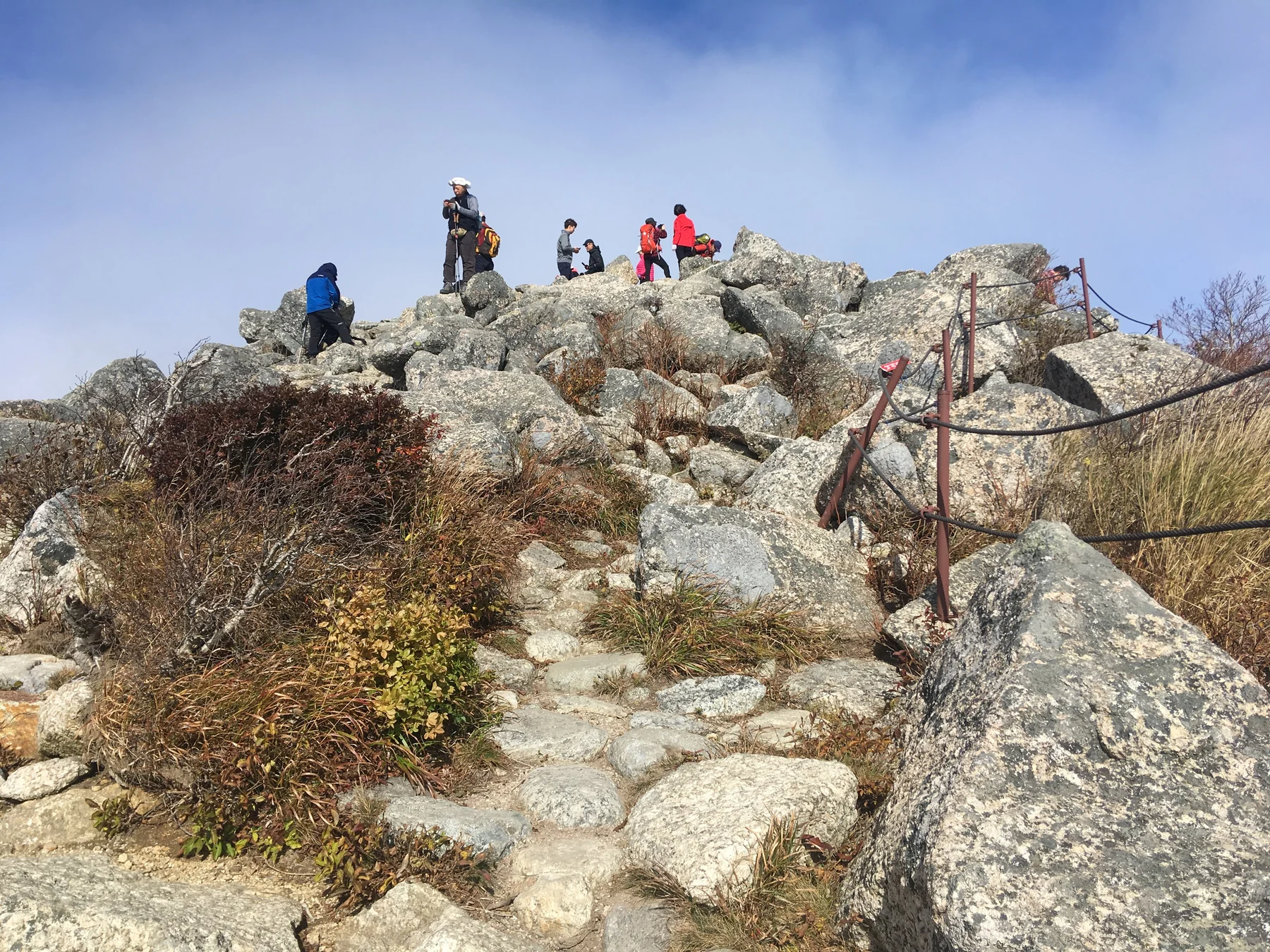
If conditions are settled and you still want a second outdoor stop, continue to 능파대 near Munam Harbour. Its honeycombed granite is the point. The cavities are called tafoni, formed through weathering processes in the coastal rock. You do not need to know the term to enjoy the shapes; it does help explain why this is more interesting than an unusually photogenic pile of stones.
Allow around 30–45 minutes for a careful look from the established approach. Do not turn the photography into a scramble across wet rock. In strong swell, stay back or skip it. At a working harbour, a breakwater or concrete wave block is not automatically a visitor path. The sea will not improve its safety record because your shoes have good reviews.
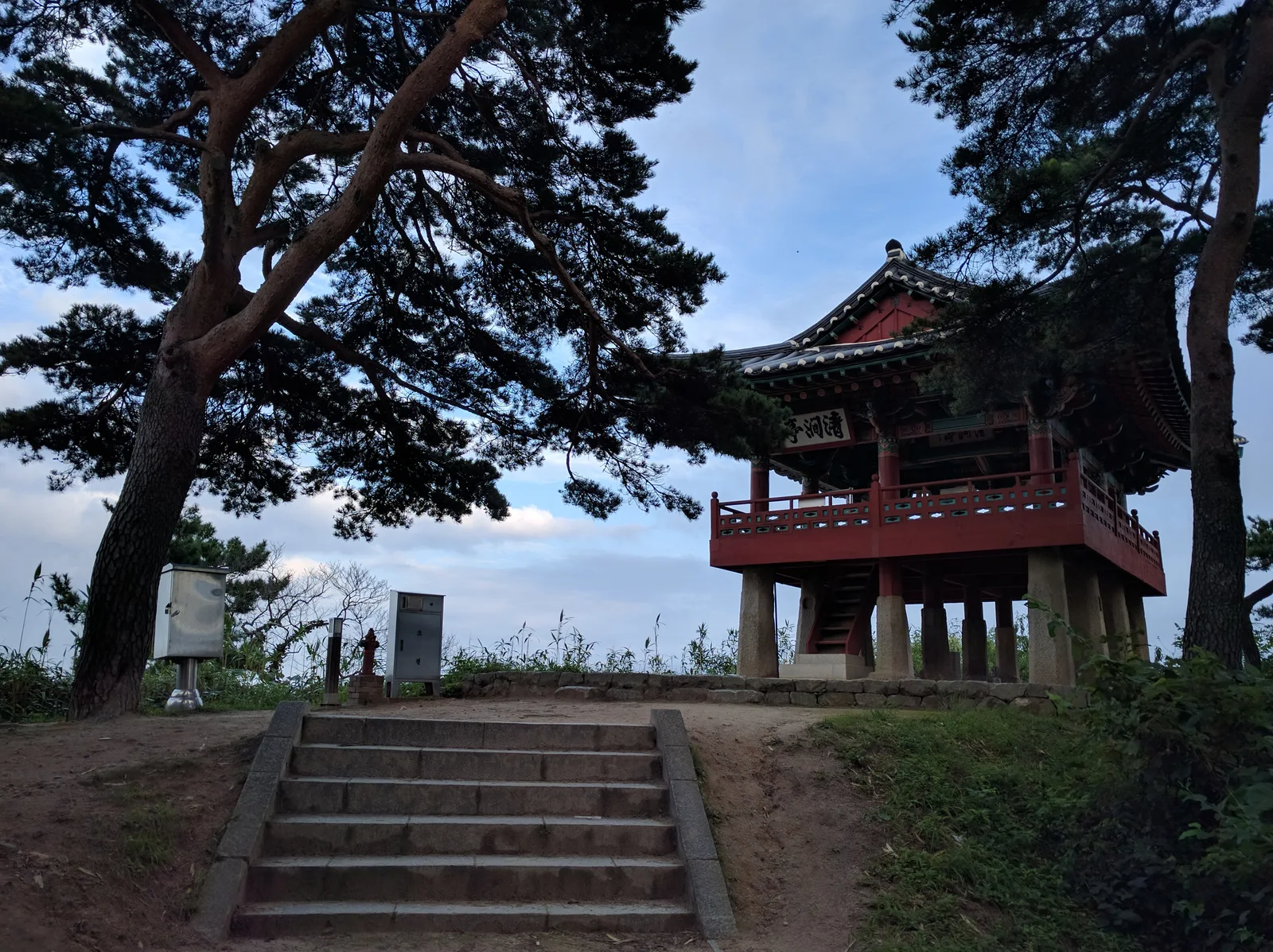
Pines frame Cheongganjeong Pavilion (September 2016).
04
Choose the bed by the evening, not just the photograph
Ayajin and Cheonggan make sense if you want to finish the first day close to the southern coastal stops. Songjiho makes sense if you want the lake and village to be the easier part of the next day. Neither choice should be made from the word “Goseong” alone. Zoom in until you can see the actual road to dinner.
For a named Songjiho hotel to investigate, the current operator lists 르네블루 바이 쏠비치, Rene Blue by Sol Beach. Older articles call it Rene Blue by Walkerhill. Check the current operator, exact room, breakfast arrangements, cancellation terms and any construction notices before booking. This is a location lead, not a personally inspected hotel or a claim of available rooms.
Wanggok Village is a different proposition. KTO describes traditional-house stays, but do not assume every house is bookable year-round. The village website did not load during this review. Contact the preservation association at 033-631-2120 about current operating dates, bedding, heating, bathroom arrangements and meals before building the trip around a stay.
For this one-night route, a confirmed coastal room is the simpler default; visiting Wanggok does not require sleeping there. Check luggage storage if you arrive before check-in. If you are bringing a dog, verify the specific room and each indoor stop separately. “Pet-friendly area” is not a permission slip for every doorway.
05
Let dinner be dinner
There are two useful food directions. Makguksu, 메밀막국수, puts buckwheat noodles and cool broth at the centre of the meal. Mulhoe, 물회, brings raw fish or seafood into a chilled, seasoned broth. Neither is an obligation to eat something cold after a windy walk.
Baekchon Makguksu, 백촌막국수, is a sourced noodle option in Toseong. KTO describes dongchimi broth, seasoned pollock and boiled pork among its offerings. Keep it as a lunch candidate and check the current queue and last order; a noodle shop is not automatically an evening restaurant. Also note that 백촌막국수 and 백도막국수 are different names. Save the exact listing you intended.
For a seafood-led variation, Goseong Bubu Hoetjip, 고성부부횟집, near Gajin Harbour is another KTO-listed lead for mulhoe, raw-fish rice bowls and rockfish stew. Gajin is north of the main Songjiho area, so it is a deliberate meal detour, not “just next door.” I would use it for a late lunch on day two if the geography and current opening suit, rather than send everyone farther north for dinner.
For the overnight itself, choose a confirmed kitchen close to the room. Ask whether the cooked fish or stew serves one or requires a shared order; check the complete price before sitting down. A smaller restaurant with sensible portions can be a better choice than the famous name that rearranges your entire evening.
After the meal, a short walk on a lit public street is enough. Do not expect a continuous, illuminated promenade between every settlement. If you want a drink, leave the car parked and arrange dinner accordingly. Staying overnight is supposed to remove a deadline, not add a late-night driving problem.
06
The next morning: change the water, change the pace
Have breakfast before committing to a walk. Check the hotel breakfast or a nearby opening the previous evening; do not assume a seaside café serves breakfast simply because it has excellent chairs.
Then turn toward 송지호, Songjiho. The beach and the lake share a name, but they are different pins. The pleasure of the lake is the contrast with the exposed coast: trees, reeds and a shoreline walk instead of another row of sea-facing tables. Keep to the established paths and give birds their distance.
I would allow 60–90 minutes for a selected lakeside section, not insist on completing a full circuit. If you want a longer signed walk to Wanggok, get the current route locally and allow substantially more time. A trail linking two attractions does not make the walk between them a five-minute connector.
The Songjiho Visitor Centre, 송지호비지터센터, at 동해대로 6021 is an optional indoor pause. KTO’s September 2026 guide lists 09:00–18:00, Monday closure and free entry, with separate charges for experiences. Confirm the current schedule, particularly if you want a bookable activity. A Monday trip can still use an accessible lakeside path without relying on an open centre.
Treat the observatory and newer sea-skywalk attractions as optional. Older photos and trial-opening notices do not establish current access or a permanent operating timetable. This route works without a tower ticket, a skywalk or a particular bridge being open. That is a useful quality in a coastal itinerary.
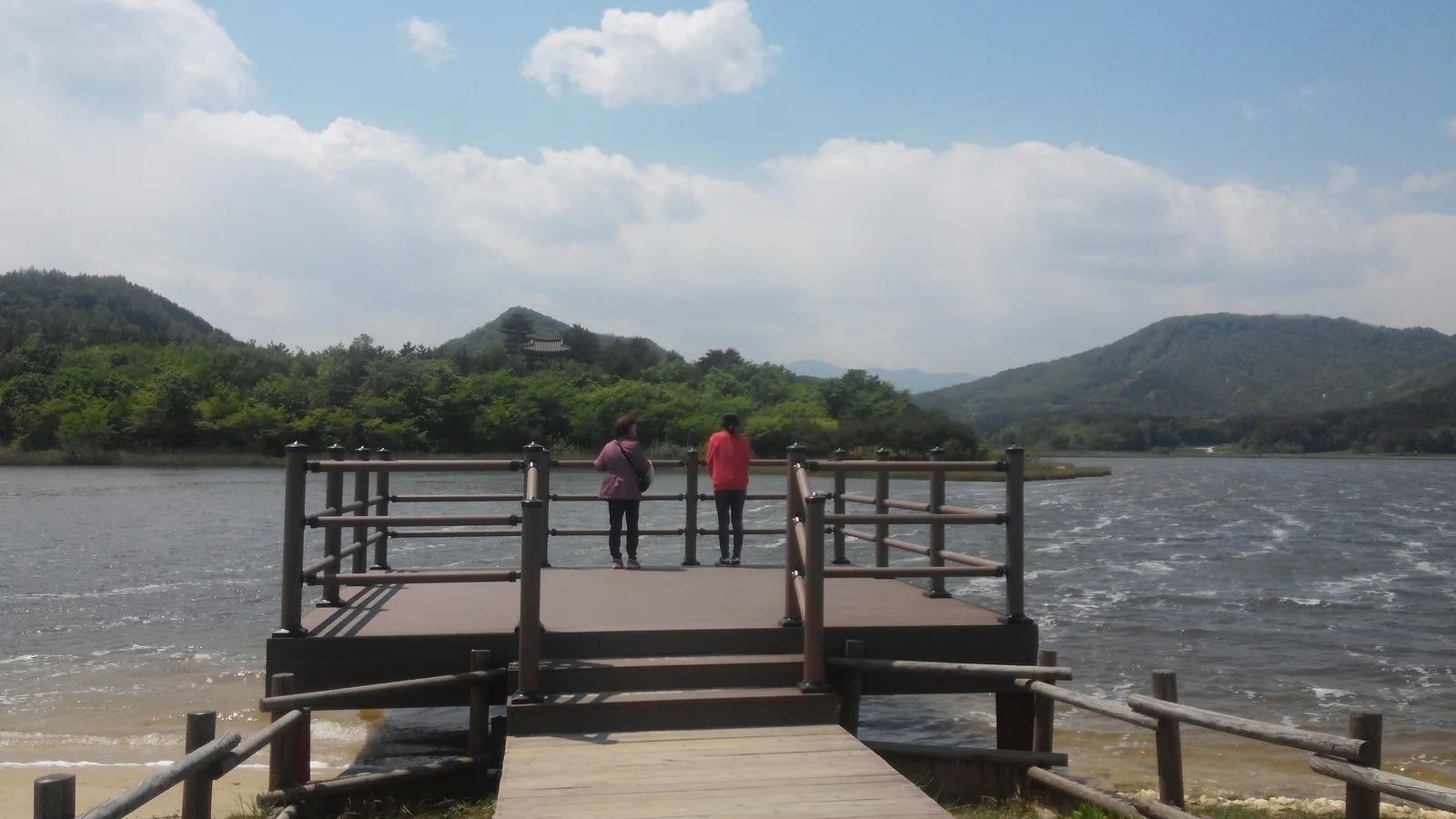
A pause beside Songjiho, away from the open coast (May 2014).
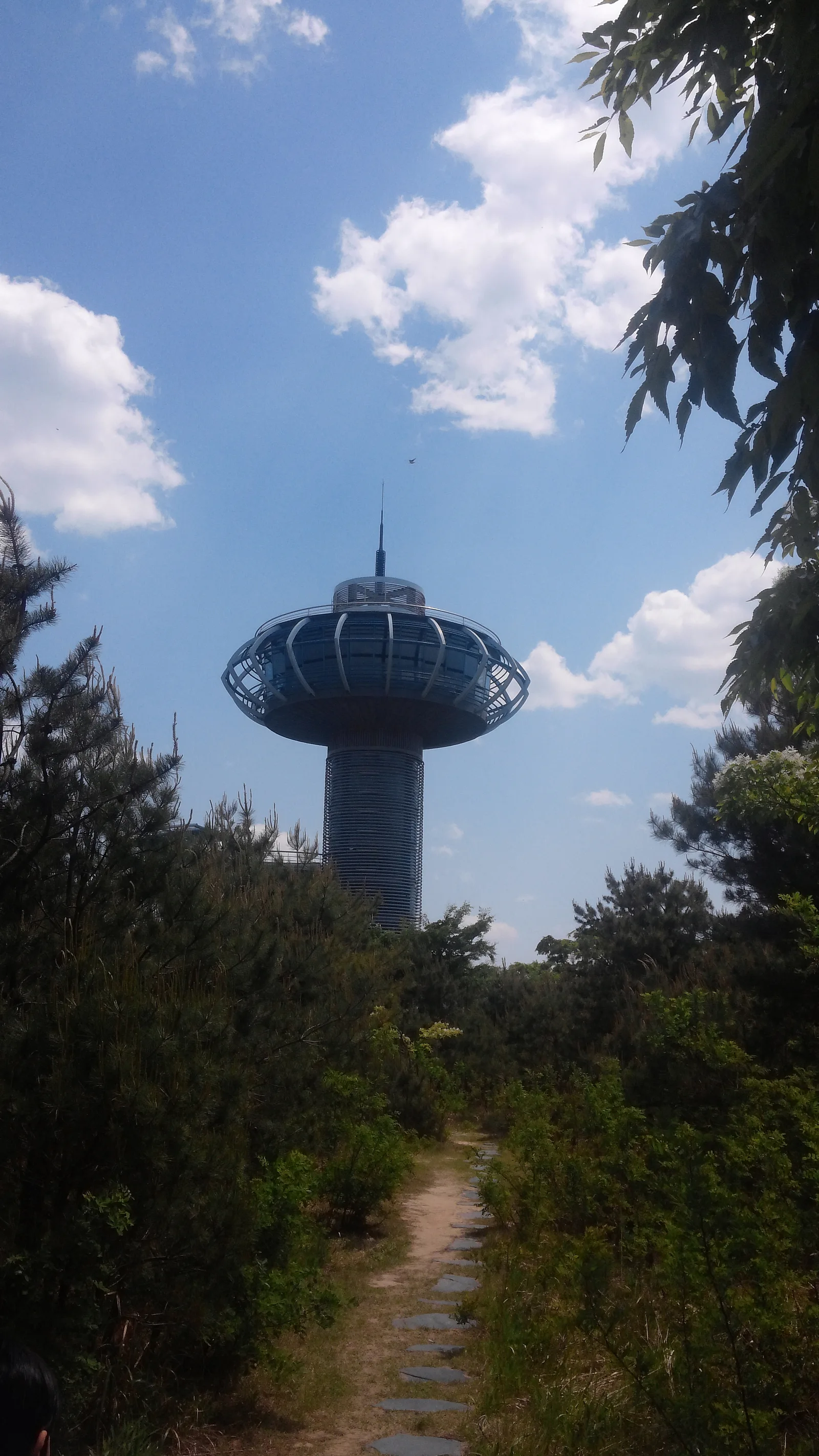
Songjiho’s observatory above the treetops (May 2014).
07
Wanggok is a village, not a photo set
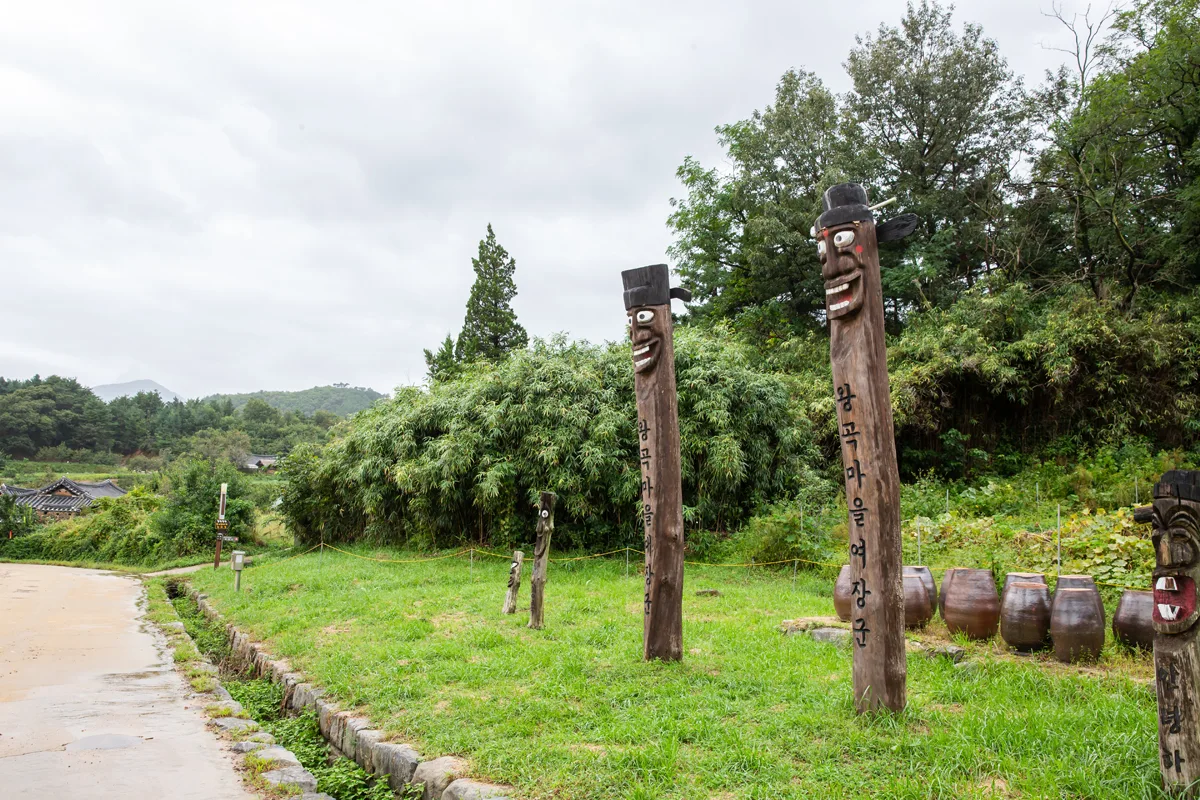
Go to 고성 왕곡마을 in daylight, after the lake or instead of the longer walk. Low hills enclose a settlement of tiled and thatched houses, with northern-style domestic architecture preserved here. The contrast with the beach is what makes the morning work: the same county suddenly feels like a different trip.
Give it 45–60 minutes for a gentle look along public lanes. Notice how the houses sit in the landscape rather than treating every door as an invitation. People live here. Keep voices down, stay out of yards and do not lean over a wall to improve the composition.
The village was used in the film Dongju, but you do not need a filming-location checklist to enjoy it. Nor should you expect an everyday performance, workshop or open house. Check a specific program before promising it to the group.
If you slept by the coast, return for the bag before the next substantial detour. The unglamorous luggage decision is often the difference between a relaxed departure and seeing the same junction three times.
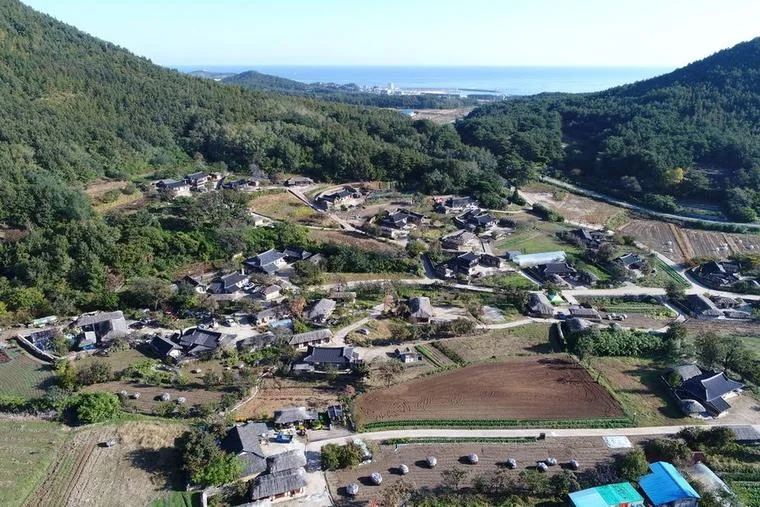
Wanggok’s roofs and fields, tucked between wooded hills (2018).
08
Save the northern coast for a different version
Hwajinpo, 화진포, is a convincing reason for a second night or a more northerly base. Its lake-and-beach setting changes the scale of the outing again. It is not a compulsory final stop after Songjiho, Wanggok, lunch and a return-bus deadline.
If Hwajinpo is your priority, swap it for part of this plan and move the accommodation north. Do the same for a visit to the Unification Observatory or a DMZ-related program: check its own access, registration and identification requirements rather than appending it casually to a beach day.
Likewise, do not add a serious Seoraksan hike because the mountains look close on the map. That deserves its own weather check, trail plan and early start. A relaxed coastal overnight and a summit day are different jobs for the same pair of legs.
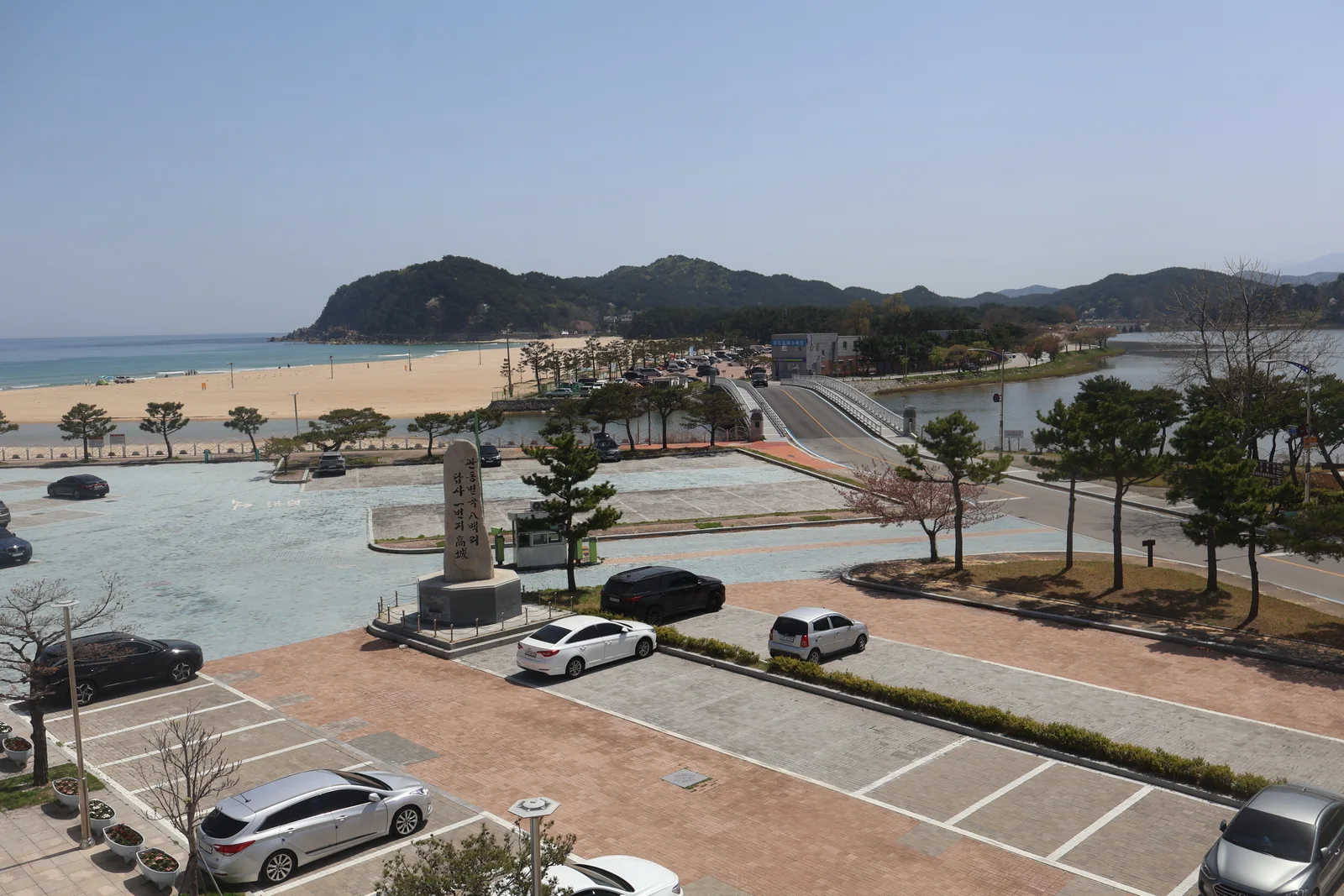
Farther north at Hwajinpo: a beach-and-lake detour for a longer stay (April 2026).
09
What to budget, and what to leave unplanned
For two adults sharing, start with editorial allowances of ₩100,000–₩200,000 for an ordinary coastal room, ₩90,000–₩150,000 for meals and café stops, and ₩50,000–₩100,000 for local taxis on a deliberately reduced car-free route. That totals roughly ₩240,000–₩450,000 before travel to Goseong, shopping and a contingency. These are budgeting placeholders, not current room or taxi quotes. A premium sea-view hotel or a seafood feast can exceed them comfortably.
With a car, replace the taxi allowance with your actual rental, fuel, tolls and parking costs. Do not assume a rental is cheaper for one person or that everyone is licensed and comfortable driving in Korea. With no car, the economy comes from removing stops, not from wishing the transfers away.
On the day before leaving, confirm the room, dinner and breakfast; check the coastal forecast; save the Korean pins; and check the return journey. Then leave a little blank space. A good Goseong trip should contain at least one moment when you are looking at the water without deciding which water comes next.
References
- Korea Tourism Organization: September 2026 Songjiho, Wanggok and visitor-centre guide
- Korea Tourism Organization: Ayajin Beach and seasonal swimming arrangements
- Korea Tourism Organization / Gangwon geopark: Neungpadae geology
- Korea Tourism Organization: coastal places including Neungpadae and Hwajinpo, updated September 2026
- Korea Heritage Service: Goseong Wanggok Village
- Korea Tourism Organization: Baekchon Makguksu menu description
- Korea Tourism Organization: Goseong Bubu Hoetjip near Gajin Harbour
- Sono Hotels & Resorts: current Rene Blue by Sol Beach operator
- Wanggok Village: contact the preservation association for current stay arrangements
- KOBUS: check actual express-bus departures and terminal names
- Bustago: check intercity-bus services for your travel date
- Goseong County tourism: local notices and attraction information