Truffle? Certainly. Caviar? Why not. If you have ever looked at a formal menu and quietly imagined what you would serve instead, Deoksugung has a rather lovely invitation: come and play chef.
At Dondeokjeon, the palace’s new exhibition turns the Korean Empire’s Western-style banquets into an interactive table. Choose ingredients, watch a digital kitchen get busy, then see a dish appear on a plate. It comes with a name and a story. All you need to bring is curiosity.
The meal is made of light, so lunch afterward is still an excellent idea. But that is part of the charm: a playful introduction to a world of imperial dinner invitations, carefully chosen tableware and food with a diplomatic job to do.
The exhibition opened November 3, 2026. I would make it the cheerful centerpiece of a Deoksugung afternoon, with enough time left for the buildings, the neighborhood and something delicious that you can actually eat.
01
A small appointment with a very grand kitchen
The Korean exhibition title is 대한제국 황실 만찬, AI로 차리다. It takes place on Dondeokjeon’s first floor through March 28, 2027, excluding palace closing days. The ingredient models, rather than a complicated ordering screen, are your starting point.
There are thirty to choose from, including lamb, pheasant, salmon, truffle and caviar. Pick what catches your interest and put the models on the table. Sensors read the combination; AI creates a dish image, while a language model gives it a menu name and story in Korean and English. A digital kitchen shows the preparation before projection mapping sets the result on a plate.
The sequence takes around five minutes. That makes it an inviting little experiment, not the whole afternoon. Allow extra time for the surrounding displays and any wait at the table; the five-minute figure is the activity itself, not a queue estimate.
I like the idea of approaching it with a companion and comparing choices. One person can compose the elegant dinner. The other can investigate whether the ingredients they love have any business sharing a plate. The pleasure is in seeing where a choice takes you.
02
Come for the interaction, notice the tableware
The digital cooking gives you a way in. Around it, the exhibition introduces the imperial banquet through objects, books, clothing and film. Approximately sixty objects and display items include cooking equipment, Western-style tableware and a plum-blossom-patterned chandelier.
Give those quieter things a little time. A utensil brings the kitchen into the story. A plate makes the formal dinner feel closer to a meal someone had to prepare, serve and clear away. It is a useful shift in scale: from “the imperial court” to the things that passed through somebody’s hands.
You do not need to know the name of every object to enjoy looking. Choose one detail: the shape of a serving dish, a decorative motif, the relationship between a practical tool and an elaborate setting. Following one good detail is often more rewarding than dutifully reading everything.
The question I would carry around the room is simple: what did the host want the guests to notice? A formal table has quite a lot to say before dinner begins.
03
A creative invitation into history
The installation grows out of the heritage agency’s research and previous work on imperial banquets. Your own generated dish is a contemporary creation built from that setting, rather than a newly discovered royal recipe. The historical displays provide the context; the table lets you play with an idea.
That combination is appealing precisely because the two parts offer different pleasures. You can enjoy the surprise of a digital dish, then look at the material culture behind the invitation. One sparks a conversation; the other gives it somewhere to go.
For a visitor who sometimes finds palace history difficult to enter, a meal is a welcoming starting point. Everyone understands choosing ingredients, setting a table and wanting guests to enjoy themselves. From there, it is a smaller step toward asking why this particular court entertained in this particular way.
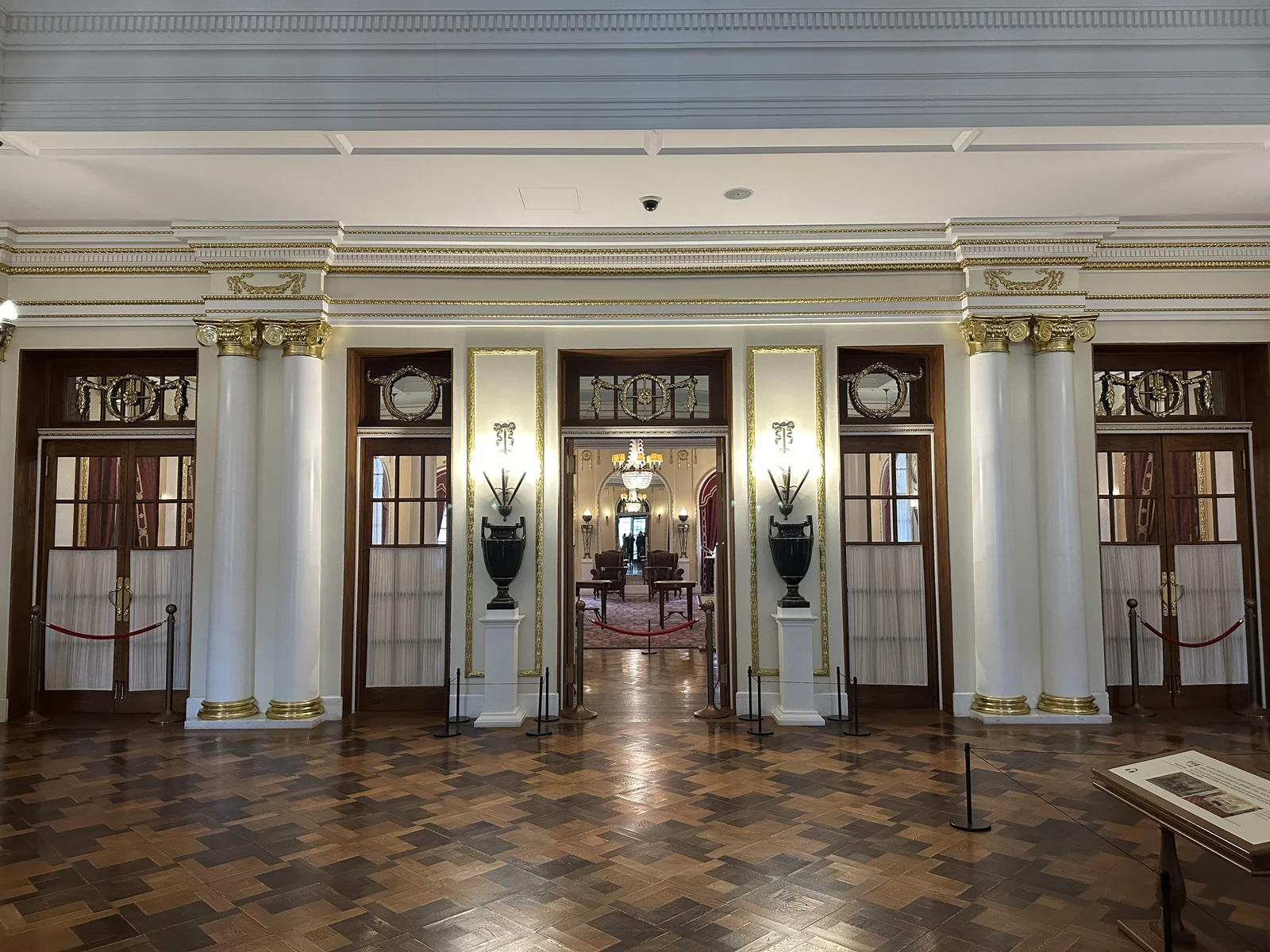
An elegant interior at neighboring Seokjojeon. January 2025.
04
Let Dondeokjeon be part of the pleasure
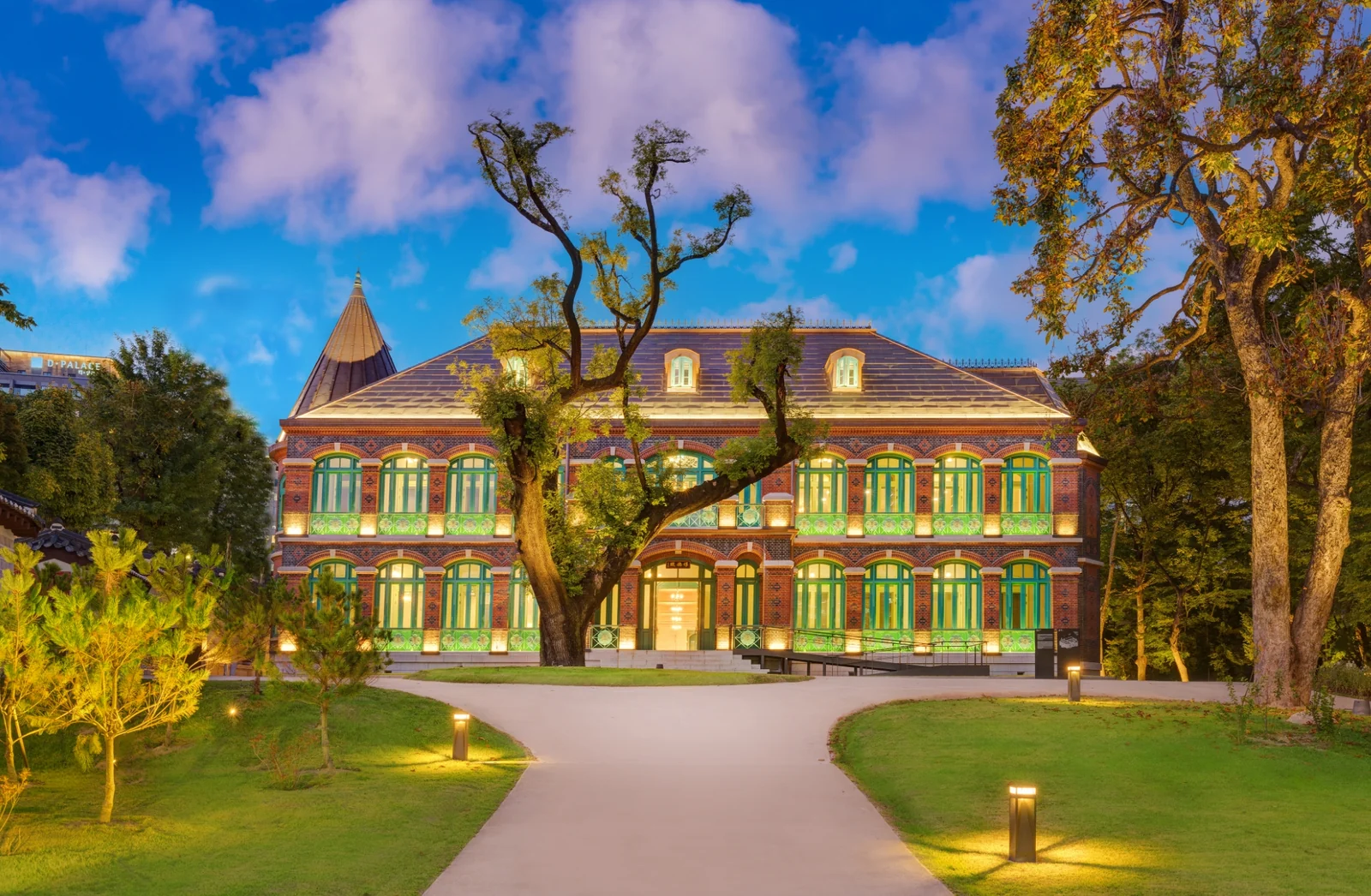
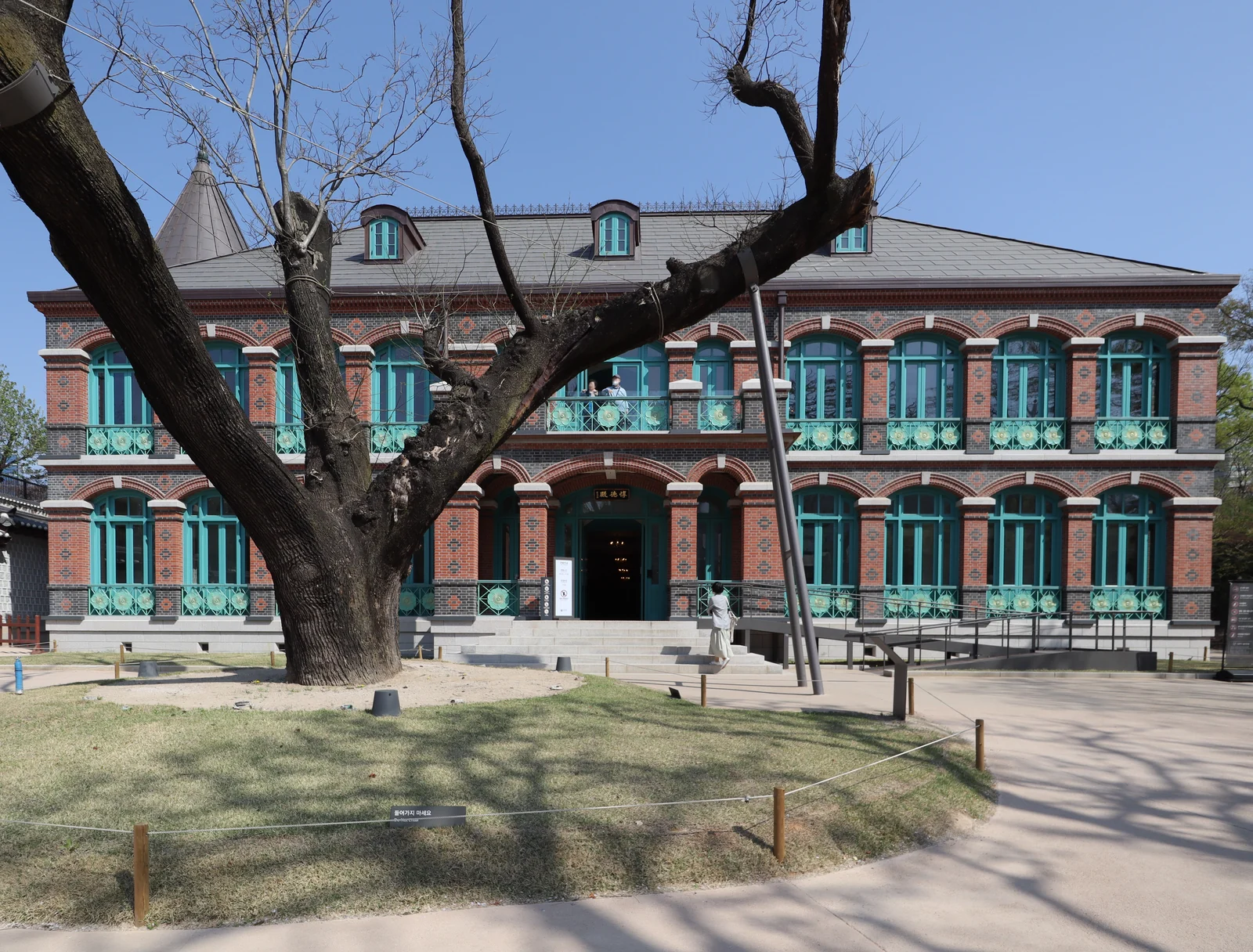
Before going inside, enjoy the building as a building. Its red brick and green-blue window frames make a distinctive photograph, and the contrast with the rest of the palace is part of what makes this visit interesting.
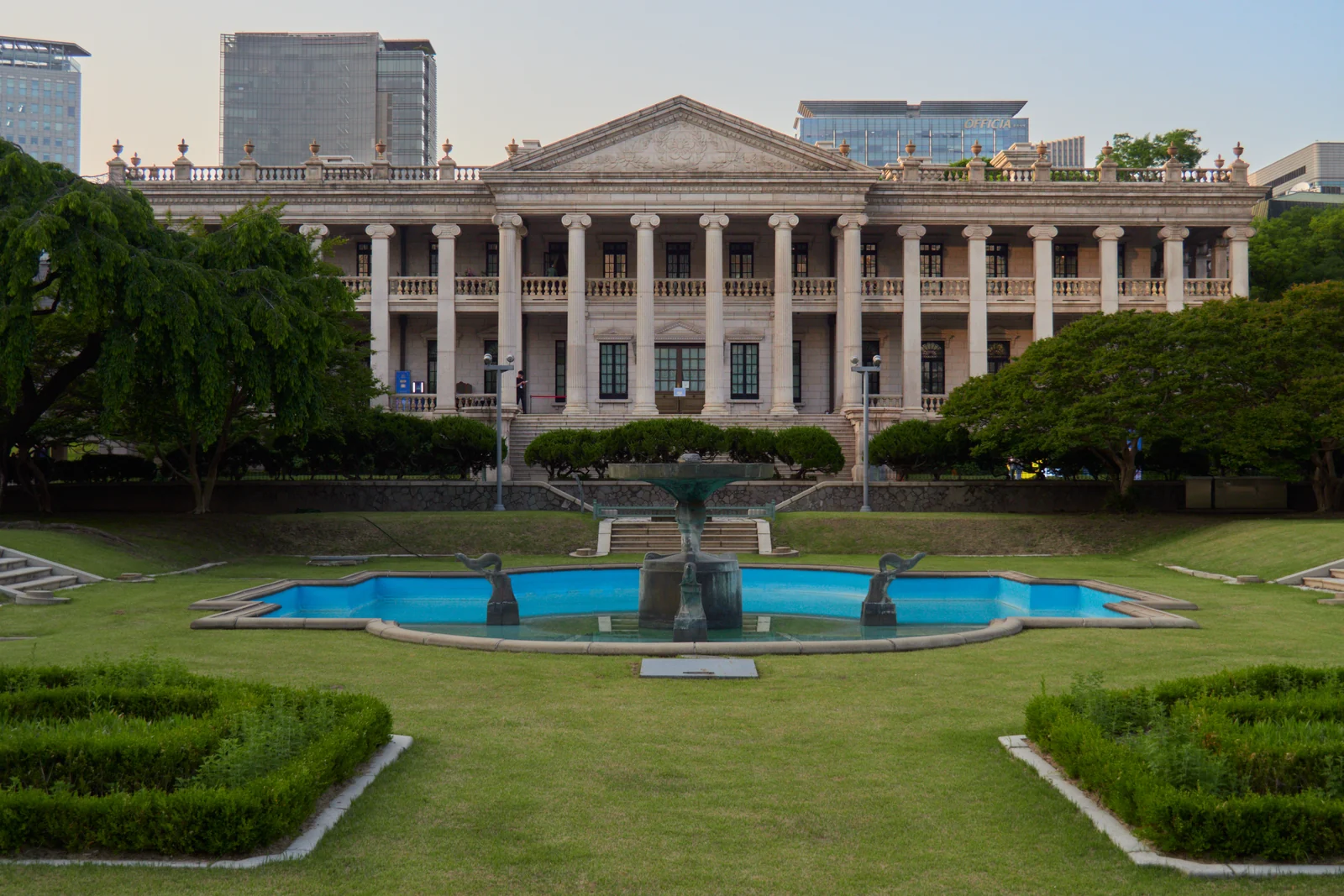
Our photographs show the palace setting in 2023–2025, including Seokjojeon’s museum interior; the new exhibition is inside Dondeokjeon. They are two different buildings. If you want to add a Seokjojeon interior tour, arrange that separately through the official reservation system rather than treating it as included in this exhibition.
I would visit Dondeokjeon first, while there is plenty of time before its earlier closing hour, then leave the grounds for a slower look. There is no need to turn the palace into a checklist of buildings. A few places you have time to notice will give the afternoon its own shape.
05
Make an afternoon of it
My suggested plan is deliberately simple: the exhibition, a palace wander, then Jeongdong for a walk and a café or meal. Keep the stops close enough that you can change your mind without spending the rest of the day on the subway.
For planning, I would set aside roughly two to three hours for the palace, exhibition and a short neighborhood walk, with food afterward. That is an editorial allowance, not a published tour duration. Someone who loves reading displays could happily want longer; a busy interactive table could also change the pace.
The exhibition is a particularly nice fit if you enjoy food culture, design or museum experiences with something to do. It is a visual interaction with English-generated menu text, although that does not establish that every label or staff conversation is available in English.
If you are hoping to cook or taste Korean food, pair the visit with a separate food experience. Think of this as the beginning of a conversation about dinner, with an actual dinner still to look forward to.
| You are interested in | A good approach |
|---|---|
| Food and cultural history | Try the table, then spend time with the objects and banquet context. |
| Architecture and photography | Visit Dondeokjeon in daylight, then explore the palace grounds. |
| A short central-Seoul outing | Keep the exhibition, palace and nearby meal together rather than adding another district. |
| Hands-on cooking or tasting | Choose a separate class or meal; the exhibition creates projected dishes. |
06
The useful details, in one place
Save 돈덕전 as well as 덕수궁 so you recognize the exhibition building once inside the palace. You do not need a restaurant booking for the projected meal. The official exhibition notice lists no separate reservation procedure, but does not publish a guaranteed walk-up waiting time either.
Dondeokjeon closes earlier than the palace grounds. Make it the first stop if you arrive later in the afternoon, then enjoy the rest of the grounds at a gentler pace. Ask the palace directly about the entrance, lifts and interactive-table setup if you need step-free access or seated participation; no access test is claimed here.
For the opening fortnight, a useful extra: general palace admission is free during the Korea Grand Festival period through November 15, 2026, with regular closing days still applying. After that dated campaign, the exhibition still has no additional charge, but the applicable palace admission is separate.
| Detail | Plan around this |
|---|---|
| Exhibition dates | November 3, 2026–March 28, 2027, excluding closing days |
| Location | Dondeokjeon, first floor, inside Deoksugung Palace, Seoul |
| Exhibition charge | No additional charge; applicable palace admission is separate |
| Dondeokjeon hours | 09:00–17:30; last entry 17:00 |
| Palace grounds | 09:00–21:00; last entry 20:00 |
| Regular closing day | Monday; check official holiday arrangements |
| Palace enquiries | 02-771-9951 |
07
A little wonder, then something to eat
The invitation is refreshingly easy to accept. Pick an ingredient. See what happens. Follow your curiosity from a bright digital plate to a real object in a display case.
A palace can feel distant when you encounter it only through dates and titles. A table offers another way to imagine the people behind the ceremony: choosing, preparing, hosting and hoping the evening goes well.
That is what makes this a lovely addition to a Seoul afternoon. A small experiment, a new detail to notice and a reason to linger somewhere you might otherwise have walked straight past.
And afterward? Find a comfortable table of your own. The emperor’s kitchen has taken care of the inspiration. You can take care of lunch.
References
- Royal Palaces and Tombs Center: exhibition dates, venue and admission
- Korea Heritage Service: interactive experience, objects and banquet research, November 2, 2026
- Royal Palaces and Tombs Center: Dondeokjeon and palace visiting hours
- Royal Palaces and Tombs Center: regular closing days and visiting rules
- Royal Palaces and Tombs Center: free general admission October 29–November 15, excluding closing days